No algorithm would have handed you this book.
Someone did.
We don't lend books. We let them go.
No algorithm would have handed you this book. Someone did.
DandeLibrary is a non-profit project that lets books travel.
It goes back to a novel. Years ago, a younger colleague handed one to our founder and asked, “Have you read this?” It was science fiction, with a title so aggressive he would never have picked it up himself. But he trusted her taste, so he read it, and he was hooked.
That kind of meeting is rare. In a bookstore, we walk to the shelves we already like. Online, the recommendations are a mirror of what we bought last time. Finding a book from completely outside your own radar is mostly luck. DandeLibrary is an attempt to make that luck happen a little more often.
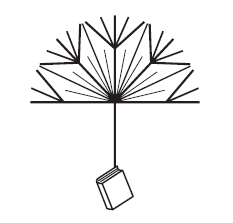
The name is dandelion plus library. The books drift like seeds.
Here’s how it works. A paperback gets a sticker with a QR code and a number. Whoever finds it scans the code and sees where the book has been. If they like, they leave a trace of their own: where they’re reading it, how they feel, what they can hear, what the air smells like. Then, when they’re done, they let it go.
A trace might read like this. Someone at an airport, about to fly abroad to study, half excited and half scared, boarding announcements in the background and the smell of fries in the air, leaving the book on a bench for whoever sits there next. Or someone on the first morning of a new job, in a coffee shop near the office, earphones in, a few pages from the end, deciding to keep it a few more days.
We don’t lend books. We let them go.
Nobody approves anything. No one checks the entries before they appear. The loop runs by itself: someone finds it, scans it, writes, lets it go, and the next person does the same.
We thought about hiding a tracker in the cover, so you could watch a book move on the map even if no one wrote a word. We decided against it. A book’s location is known only when a reader chooses to share it.
The whole thing runs on trust in people. Some books will get lost. Some will get kept. Some will probably get stolen. That’s fine. If a book goes quiet for a long time, maybe someone found the book of their life and can’t let it go. Maybe it’s been sitting at the bottom of a pile for two years, and one day it will come back to life with a single line: “Took me a while. It was good.”
Ideally, just before it falls apart, a book finds its way back to the shelf where it started. Same title as a thousand other copies, but no two alike. Each one carries the people who read it.
The sticker has a smaller reason too. We like reading paperbacks bare, without a cover, but we don’t always want strangers to see what we’re reading. A good sticker hides the title and turns the book into something you’re happy to carry.
The first books are our own favorites. After that, we’re asking the people who’ve been good to us one question: what book changed your life?
We’re starting with a few dozen. It will probably reach a hundred sooner than planned. There’s no money in it, and there isn’t meant to be. An app is on the way.
The page cannot be found. The book has already left.